Two packs bought the same day, flown on the same aircraft, can end up a hundred cycles apart in usable life. The cell inside them is almost never the reason. What happened between flights is.
Quick answer: Storage voltage is the habit that decides pack life: 3.8V to 3.85V per cell, which is about 22.8V on a 6S pack. Charge at 1C, let a pack cool to ambient before it goes back on the charger, warm it to room temperature in winter, and retire anything that has puffed. Leaving packs fully charged overnight is tolerable; leaving them there for weeks is what costs capacity. Fast charging trades cycle life for convenience, and temperature is the silent killer. More detail in our lifespan guide and the battery safety guide.
| Habit | Target | Why it matters |
|---|---|---|
| Storage voltage | 3.8-3.85V per cell, about 22.8V on 6S | Half charge slows capacity loss |
| Charge rate | 1C | Faster charging trades cycle life for convenience |
| After a flight | Cool to ambient before charging | Heat accelerates cell ageing |
| Winter | Warm to room temperature first | Cold packs should not go straight on the charger |
| Fully charged storage | One night is fine, weeks are not | Weeks at full charge costs capacity |
| Puffed pack | Retire it | The chemistry has already changed |
Charging and storage are the boring part of owning a drone. They’re also the part that decides what a battery really costs you per year.
Storage voltage is the one habit that matters most
A lithium pack is happiest at around 3.8V to 3.85V per cell, which is roughly half charge. At that level the chemistry is stable and the pack can sit for months without losing meaningful capacity. A 6S pack, then, rests at about 22.8V.
There are two mistakes here, and we see both all the time. Leaving packs fully charged, and leaving them fully empty. A pack sitting at 4.2V per cell speeds up its own degradation, and that effect compounds over weeks, not days. A pack left deeply discharged can slip below the voltage the charger is willing to recognise, and then it just won’t wake up.
Fly on a schedule and charge the night before, that’s fine. Charge, fly, put the pack back to storage level the same day. If your flying is irregular, charge at the field and storage-charge when you get home.
Charge rate: fast is not free
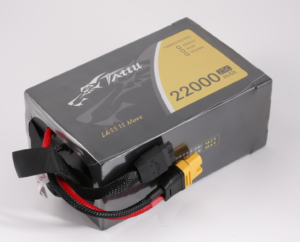
1C is the safe default, a rate equal to the pack’s capacity. A 22000mAh pack charges at 22A, which is already a lot of current. Push past 1C and you shorten cycle life, and on large UAV packs the heat builds fast because there’s a lot of mass holding it in.
Balance charging matters more than speed. At the end of the charge the charger brings every cell to the same voltage, and a pack that gets balance-charged routinely stays healthy far longer than one that never does. A single drifting cell drags the whole pack down with it, and on a 12S pack that drift isn’t a small thing.
Temperature is the silent killer
Both extremes do damage. Charge a cold pack and the current has to fight high internal resistance, which is the fastest way to plate lithium onto the anode. Charge a hot pack right after a flight and it’s the same problem the other way round.
The rule we follow is simple. After a flight, let the pack come back to ambient before it goes on the charger, and in winter let it warm to room temperature first. Never charge a pack straight out of a hot aircraft.
Storage temperature counts too. A pack that sits in a hot shed all summer ages noticeably faster than one kept in a climate-controlled room. If a hot space is all you’ve got, storage-charge the packs and accept a shorter life.
Habits that quietly cost you packs
Leaving packs fully charged after a weekend of flying. Discharging until the aircraft cuts off. Charging at 3C because you’re in a hurry. Storing packs in a sealed hot vehicle. Ignoring a pack that puffs a little because it still flies. On its own, each one costs a bit. Together they’re the difference between a pack that lasts two seasons and one that lasts one.
A puffed pack is a pack on its way out. This is the one we see come back puffed and still flying. Retire it, don’t work it harder. A puff means gas has built up inside, and gas means the cell chemistry is already changing.
Smart packs change part of the equation
Smart packs carry a management board that tracks cell voltage, temperature and cycle count, and they can hold themselves at storage level without you having to think about it. The Plus 1.0 Compact 16000mAh 12S and the NEO Compact G330 14S are good examples, and we keep these on the shelf. They cost more, and across a fleet they earn it back by taking the human error out of routine care.
A smart pack doesn’t make care optional, though. It makes good care easier to keep up.
Chargers we rely on
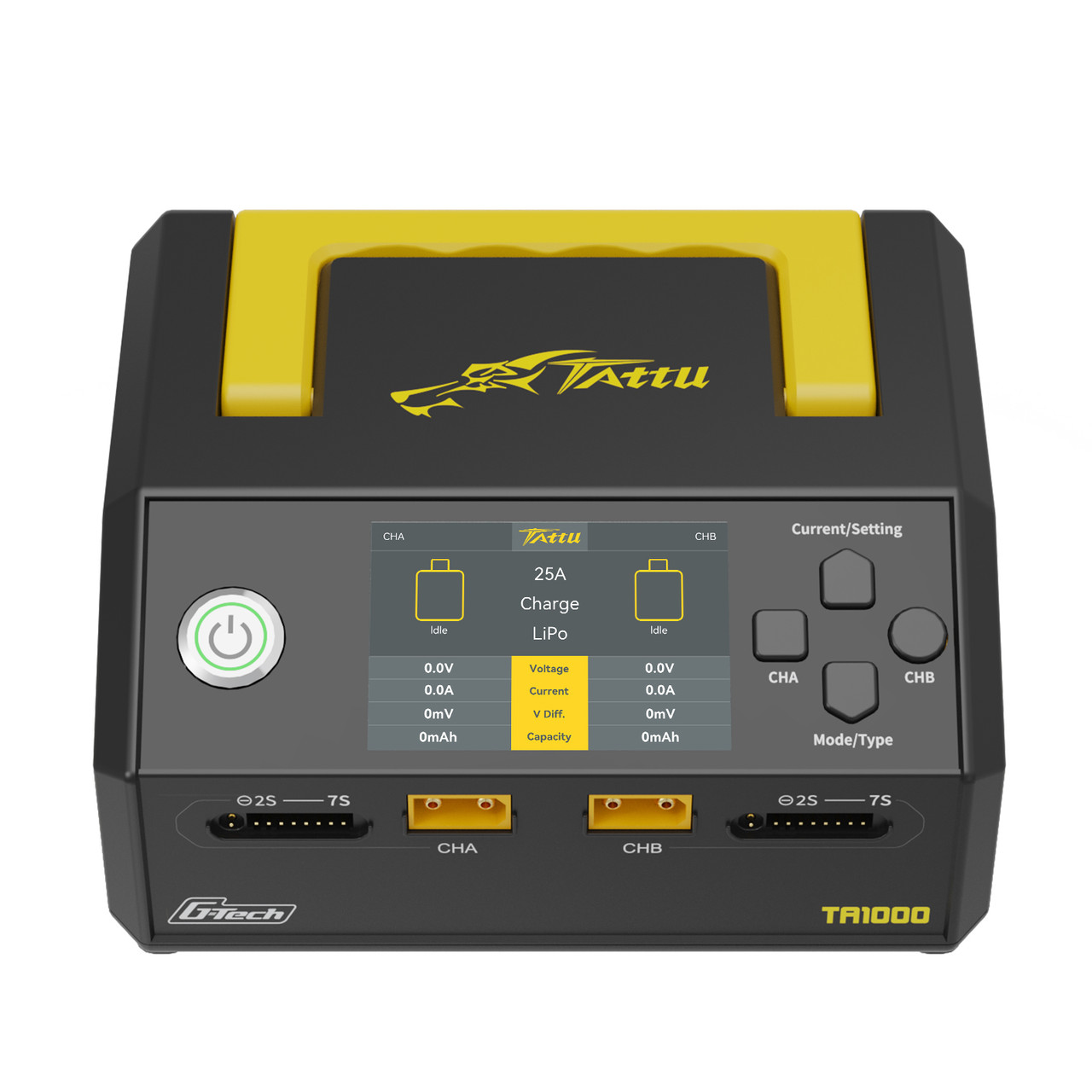
Match the charger to the pack’s cell count and capacity, not the other way round. The Tattu TA1000 handles dual-channel work up to 7S and it’s what we send out with mid-size packs. The TA3000 PLUS covers the 12S to 24S range for large packs, and the TA300 charges eight packs at once, which is the sensible pick once you’re running a fleet. For smaller packs there’s the iMars S100, a compact balance charger with USB-C power. Everything sits under chargers and accessories.
Frequently asked questions
What voltage should I store a LiPo pack at?
Around 3.8V to 3.85V per cell, about half charge. A 6S pack sits at roughly 22.8V. This is the single habit that separates packs that last from packs that do not, as our lifespan guide explains.
Is it OK to leave packs fully charged overnight?
One night is tolerable. Leaving them fully charged for weeks is what costs capacity.
How fast can I charge a UAV pack?
1C is the safe default, and on large packs it is already a lot of current. Charging faster trades cycle life for convenience, so check the charger’s output against pack capacity in our chargers and accessories range.
Should I charge a pack straight after flying?
No. Let it cool to ambient first, and in winter let it warm to room temperature before it goes on the charger.
What should I do with a puffed pack?
Retire it. A puff means the cell chemistry has already started to change, and flying it again puts the aircraft and everything near it at risk, which is covered in our battery safety guide.
Tell us which packs you are running and how many, and we will suggest a charger and a routine that fits. The range is on our chargers and accessories page, with background in the UAV battery guide.