Introduction
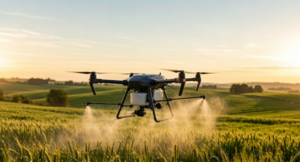
Agricultural drones have revolutionized farming practices, enabling efficient crop spraying, field mapping, and monitoring. But behind every successful agricultural drone mission is a reliable, high-performance battery system. Agricultural drones have unique power requirements – they carry heavy payloads, operate for extended periods, and need to withstand demanding environmental conditions. In this guide, we’ll explore how to choose the right battery for your agricultural drone operations.
Understanding Agricultural Drone Power Needs
Payload Considerations
Agricultural spraying drones typically carry 10-40 liters of liquid payload, which means the battery must provide enough power to lift and sustain flight with significant additional weight. This requires high-capacity batteries with robust discharge capabilities.
Flight Time Requirements
Agricultural operations cover large areas. A typical spraying mission may last 10-20 minutes per battery, with multiple flights needed to cover a full field. Longer flight times per battery mean fewer swaps and greater operational efficiency.
Durability and Reliability
Agricultural drones operate in challenging environments – dust, humidity, temperature extremes, and vibration. Batteries must be robust enough to withstand these conditions while maintaining consistent performance over hundreds of cycles.
Key Battery Specifications for Agricultural Drones
Voltage (S Rating)
- 6S systems (22.2V):Common on smaller agricultural drones
- 12S systems (44.4V):Standard for larger agricultural drones with heavy payloads
- 14S-18S systems:Emerging for very large agricultural drones requiring maximum power
Capacity
- Small agricultural drones:6,000-12,000mAh
- Medium agricultural drones:16,000-22,000mAh
- Large agricultural drones:25,000-40,000mAh
Discharge Rate (C Rating)
Agricultural drones don’t need the extreme C ratings of FPV racing drones. Steady, sustained power is more important. Look for batteries with 10C-25C ratings, which provide sufficient sustained current for agricultural operations.
Tattu Agricultural Battery Solutions
Tattu AGRI Series
- AGRI 16000mAh 44.4V 15C 12S1P:Ideal for medium agricultural spraying drones
- AGRI 22000mAh 44.4V 25C 12S1P:Higher discharge rate for heavier payloads
- AGRI 16000mAh 45.6V 25C 12S1P HV:High voltage version for extended flight times
- AGRI 22000mAh 45.6V 25C 12S1P HV:High voltage with larger capacity for maximum coverage
Tattu G-Tech Agricultural Batteries
- G-Tech 6S 10000mAh-23000mAh:Smart battery with automatic charger configuration
- G-Tech HV 6S 17000mAh-23000mAh:High voltage options for extended missions
- G-Tech 4S 22000mAh:For 4S agricultural drone systems
Tattu Semi-Solid State Agricultural Batteries
- 300Wh/kg 17000mAh-30000mAh 6S:20-30% more flight time than traditional LiPo
- 330Wh/kg 25000mAh-33000mAh 6S:Even higher energy density
- 330Wh/kg 33000mAh-76000mAh 12S:For large agricultural platforms
Tattu NEO Series
- NEO Compact 16000mAh-36000mAh 12S-14S:Compact form factor with smart features
- NEO Ultra High Voltage 27000mAh-41000mAh:For the most demanding agricultural platforms
High Voltage (HV) vs Standard LiPo for Agriculture
High Voltage batteries offer several advantages for agricultural drones: more energy per gram (approximately 5-8% more), better sustained voltage throughout the discharge curve, and longer flight times. However, HV batteries require HV-compatible chargers.
Charging Solutions for Agricultural Operations
High-Power Chargers
- Tattu TA9000 Plus (9000W):The most powerful charger for large agricultural batteries
- Tattu TA3000 Plus (3000W):Balanced option for medium operations
- Tattu TA1500 (1500W):For smaller agricultural battery fleets
Dual-Channel Charging
Dual-channel chargers allow you to charge two batteries simultaneously, cutting total charging time in half. The Tattu TA series dual-channel chargers are particularly valuable for agricultural operations.
Battery Management Best Practices for Agriculture
Rotation Strategy
Rotate your batteries so each pack gets equal use. This prevents any single battery from being cycled more frequently than others, extending the life of your entire fleet.
Temperature Management
Agricultural operations often occur in hot weather. Keep spare batteries in a shaded, cool location and never charge or use batteries that are too hot to touch comfortably.
Cycle Tracking
Track the cycle count and performance of each battery. G-Tech smart batteries make this easy by automatically recording cycle data. Replace batteries before they fail in the field.
Storage Between Seasons
During off-seasons, bring all batteries to storage voltage and store them in a cool, dry location. Check storage voltage monthly and top up as needed.
Conclusion
Choosing the right battery for your agricultural drone is a critical decision that impacts operational efficiency, safety, and cost. Tattu’s comprehensive agricultural battery lineup provides options for every agricultural drone platform. By understanding your drone’s power requirements and matching them with the right battery technology, you can maximize your operational efficiency and get the most from your agricultural drone investmen