By the time a customer asks us to help spec an inspection or survey aircraft, they have usually already chosen the interesting parts: a gimbal here, an RTK base there, an autopilot from a forum thread. What is missing is the part that decides whether the aircraft works, which is how those pieces talk to each other.
Quick answer: Build the stack in constraint order: link, RTK, payload, then autopilot. Settle control and video first, with a G20 3-in-1 ground station or a G12 class controller and a relay, repeater or antenna if terrain demands it. Add RTK only when you need repeatable positions, not for general inspection. Pick the gimbal from the deliverable: the C12 dual-light for visible plus thermal, the C20 for 23x zoom with night vision. Then choose the S3 open-source avionics or the S3-A, which ships with custom ArduPilot firmware already installed. Adding a gimbal later usually means revisiting propulsion sizing, because weight and power both move. See our Skydroid systems page and the UAV avionics guide.
| Layer | What we fit | Pick it when | Constraint it sets |
|---|---|---|---|
| Link | G20 3-in-1, G12, plus relay and antenna | You need live video or 20km-class reach | Everything downstream depends on it |
| RTK | Base station or network RTK | You need repeatable positions for mapping or spraying | Adds setup time and a ground reference |
| Payload | C12 dual-light, C20 23x zoom night vision | Night work or fine detail | Weight and power draw |
| Autopilot | S3 open source, S3-A with ArduPilot firmware | You configure it yourself or want it preconfigured | Firmware and integration choice |
This is the integration view of a Skydroid mission stack: the link, the positioning, the payload and the autopilot, in the order they constrain one another.
The link comes first, because everything depends on it
Control and video are the floor the rest stands on. If the link is not settled, the gimbal choice and the RTK setup are academic. We cover that layer in our Skydroid controller and video link guide and in the relay and antenna guide. Sort the link, then come back here.
RTK: when it is worth the extra setup
Ordinary GPS puts you within a few metres, and it drifts between flights. That is fine for flying around and looking at things. It is not fine for mapping the same field twice, or for flight lines that have to line up, or for repeatable spray coverage.
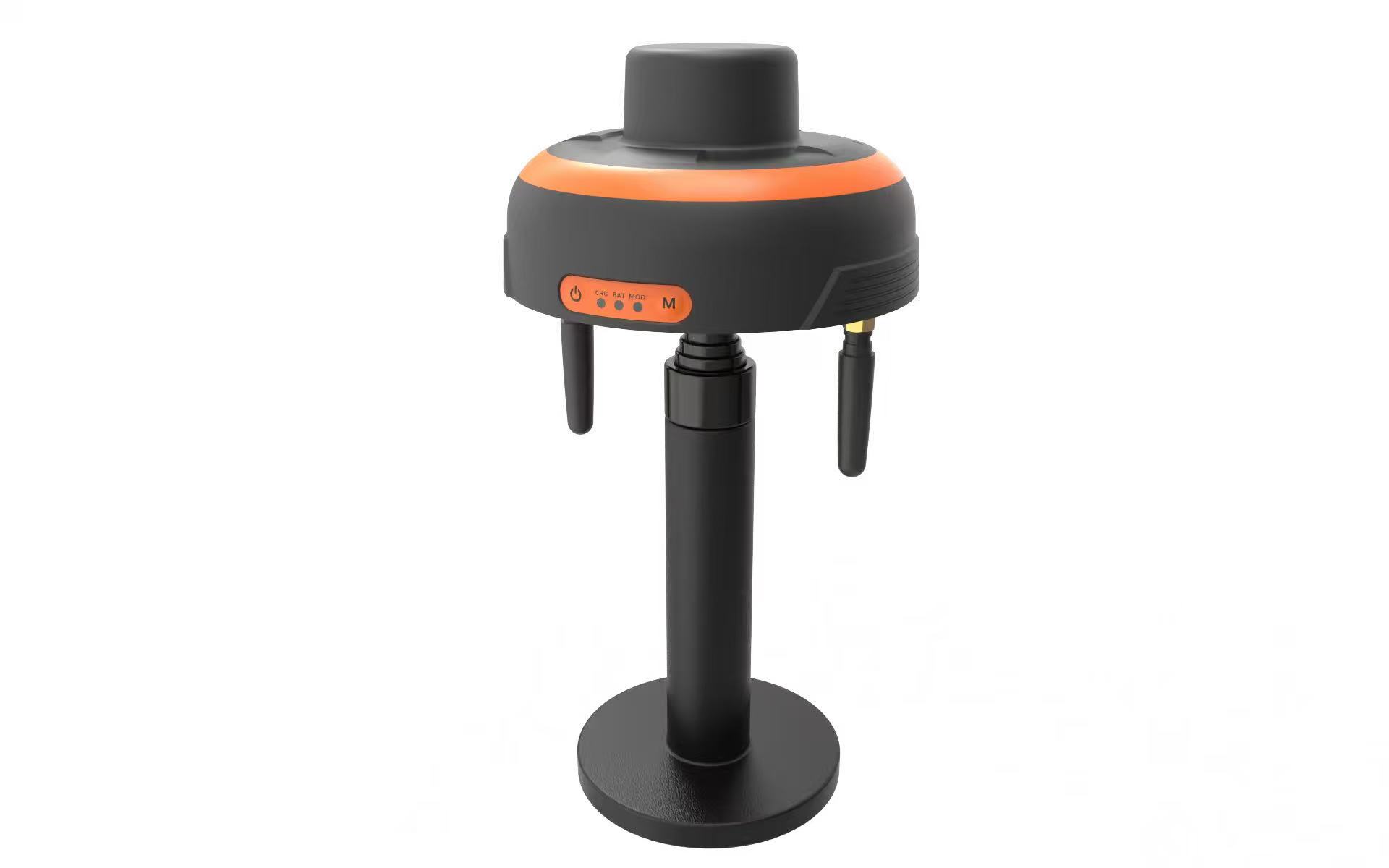
The Skydroid RTK base station is portable and built for a long day in the field. Add it when the mission needs consistent positions rather than approximate ones. If your work is inspection and reconnaissance only, it is money you do not have to spend.
One habit we insist on: put the base station in a spot you actually surveyed, or the correction it broadcasts is just a more confident kind of wrong.
Payload: choose the gimbal from the task backwards
Start with what the customer needs to see, then pick the camera. The C01Pro is the stabilised, waterproof and dustproof option built for plant-protection drones, where spray drift and dust are the normal environment. The C11 4K 3-axis gimbal is the general imaging workhorse. For inspection that runs into the night, the C12 dual-light gimbal with 2K visible plus thermal is the one. And where the deliverable needs detail from a distance, the C20 with 23× optical zoom and night vision earns its place.
The integration point people forget: a heavier head changes the aircraft’s centre of gravity and its power draw, which loops back to the propulsion side of the build. Add the gimbal before you size the motors, not after.
Avionics: the autopilot under it all
The S3 open-source avionics system runs open flight-controller hardware across UAV, USV and UGV projects, which matters if you want to control the software rather than rent it. If you want a shorter path to a flying aircraft, the S3-A ships with custom ArduPilot firmware already loaded, so you start from a known configuration instead of a forum thread.
A worked build: survey aircraft
A customer asked for a fixed-wing survey platform flying repeatable lines over farmland. Working backwards: the deliverable was orthomosaic accuracy, so RTK went in first, with the base station set on a surveyed point. The payload was a stabilised camera rather than a thermal head, so the C11 was enough. The autopilot was an S3-A so line flying came from known firmware. The link needed 10km of reliable control with occasional live video, which put them on a G12.
In that order, each choice constrained the next and nothing had to be re-bought. Reverse that order and you get the more common outcome: a gimbal bought first, then a link that cannot carry its video, then an autopilot that does not match the airframe.
Integration mistakes we see
- Buying the gimbal before sizing the propulsion, then discovering the aircraft is overweight.
- Adding RTK to an aircraft whose flight controller cannot use the correction properly.
- Choosing the link last, then discovering the video feed cannot reach the ground station.
- Mixing firmware across boards and assuming the defaults are compatible. They are not always.
Frequently asked questions
Do I need RTK for inspection work?
Usually not. It pays off when you need repeatable positions, such as mapping or precision spraying, which is the comparison in our base versus network RTK guide.
Which gimbal for night inspection?
The C12 for visible plus thermal, or the C20 for 23x zoom with night vision. Both sit in the Skydroid accessories range.
What is the difference between the S3 and the S3-A?
The S3 is open-source avionics you configure yourself. The S3-A adds custom ArduPilot firmware already installed, which is the shortcut covered in our avionics guide.
Can I add the gimbal later?
You can, but expect to revisit the propulsion sizing when you do. Weight and power both move, as the propulsion overview explains.
Tell us the mission and the deliverable and we will work back to the stack. Everything is listed on our Skydroid systems page and the Skydroid accessories page, with firmware and manuals on the Skydroid download page.


Pingback: Drone Gimbal Cameras: Thermal vs Zoom for Inspection